
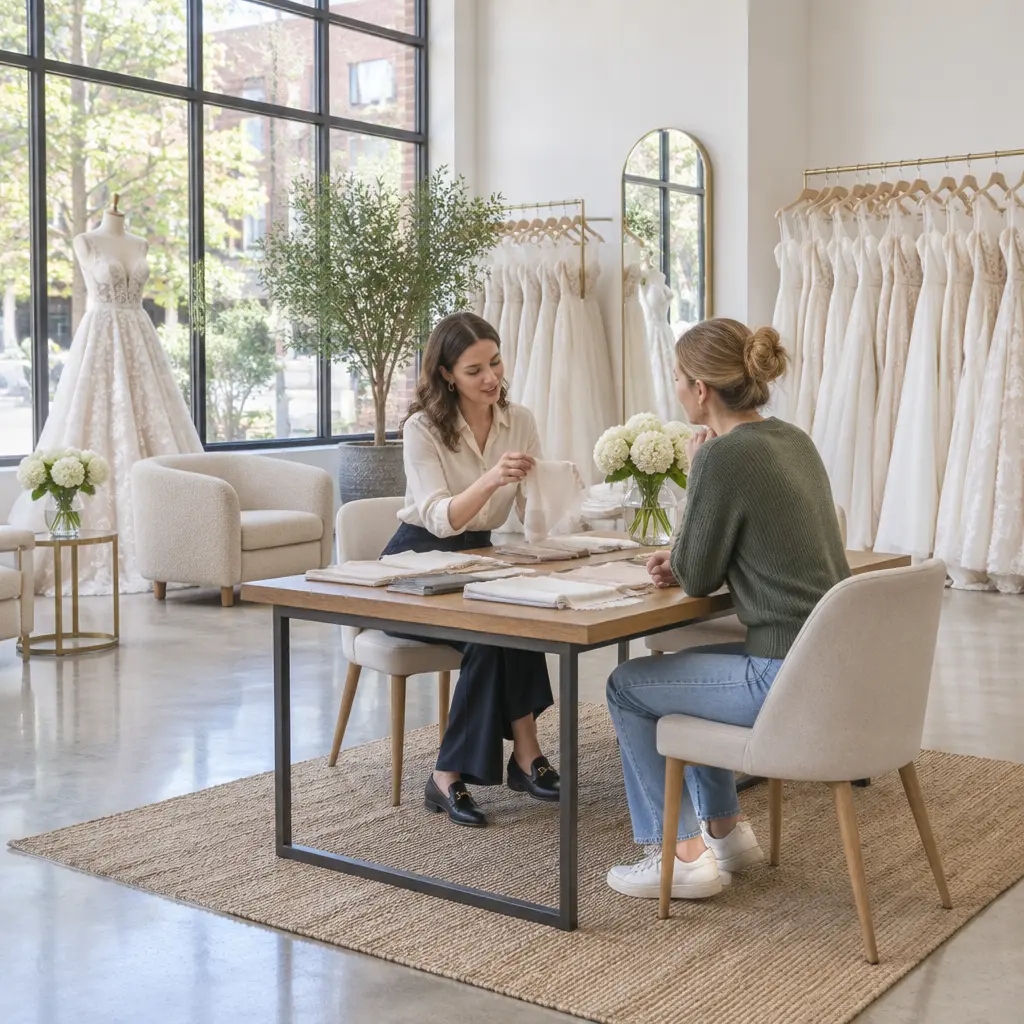
Bridesmaid dress planning is the process of choosing outfits that suit the wedding while respecting the people who will wear them. To keep the decision from becoming a source of conflict, set a realistic budget, agree on a flexible style direction, ask about fit and comfort, and make deadlines and responsibilities clear. The stakes are practical as well as personal: wedding-party costs can add up, and a 2024 survey by The Knot found that U.S. couples spent an average of $2,000 on bridesmaid-related expenses, including attire and other costs. Clear expectations and collaborative choices help prevent surprise expenses, last-minute alterations, and avoidable hurt feelings.
Bridesmaid dress choices depend on budget, fit, and flexibility
A bridesmaid dress plan is the set of decisions that determines what members of the wedding party wear, how they obtain it, and when they need to have it ready. Wedding etiquette experts and bridal retailers commonly recommend making the couple’s visual preferences clear while giving attendants reasonable options. In practice, “flexibility” can mean a shared color palette with different cuts, coordinated separates, or one dress style offered in several sizes and lengths.
The aim is not to make every attendant responsible for designing the wedding look. It is to avoid treating a group of people with different budgets, body shapes, schedules, and comfort needs as if one dress must work identically for everyone. A useful plan sets the non-negotiables—such as color family or formality—then allows choice where it does not compromise the overall look.
Budget is the first source of preventable friction
A bridesmaid budget should cover more than the dress’s listed price. Shoes, shipping, taxes, alterations, undergarments, and rush fees can raise the final cost. The Knot’s 2024 Real Weddings Study reported an average of $2,000 in bridesmaid-related expenses per couple; that figure covers more than dresses alone, but it illustrates why costs should be discussed early rather than assumed.
Before selecting a retailer or dress, privately ask attendants for a comfortable price range and explain what the couple will pay for, if anything. Avoid asking people to disclose personal financial details to the whole group. If the preferred dress exceeds the group’s range, consider a less expensive retailer, a wider selection of styles, or a contribution from the couple.
Fit and comfort are part of the dress decision
Fit refers to how a garment works for an individual’s measurements, mobility, and preferences—not merely the size printed on its label. Size charts vary between brands, and formalwear may need alterations. Ask attendants to consult the selected brand’s measurement guide and allow time for a fitting; do not compare everyone’s measurements or sizes in a group chat.
Comfort matters because attendants may wear the outfit for hours while standing, walking, sitting, and helping with wedding-day tasks. Offer practical alternatives for people who prefer sleeves, need supportive straps, want a different neckline, or require a maternity-friendly cut. If the wedding includes a long outdoor ceremony or warm-weather reception, fabric weight and breathability deserve as much attention as photographs.
Bridesmaid dress coordination works best with clear choices
Coordination means creating a coherent wedding-party appearance without requiring identical garments. A couple can coordinate by specifying color, fabric, length, or formality, then decide how much variation to permit. The right approach depends on the wedding’s setting and the couple’s priorities, but a short written brief helps everyone understand the same expectations.
Matching dresses create a simple, consistent look
A matching-dress plan asks attendants to wear the same style, color, and often the same fabric. It is straightforward to communicate and can produce a uniform look in group photographs. However, a single cut may not suit every body, and a single price point can exclude people with different budgets. If matching is important, check whether the style comes in a broad size range and whether the retailer offers alterations or equivalent alternatives.
Mix-and-match dresses offer controlled flexibility
A mix-and-match plan gives attendants a limited choice of styles while keeping shared elements—usually a color, fabric, or level of formality. For example, the couple might select a single color family and let attendants choose among several approved silhouettes. This can make fit and comfort easier to accommodate, but it requires clear boundaries: specify the retailer or approved colors, the dress length, and the deadline for submitting a choice.
Color can look different across fabrics, lighting, and production batches. If exact matching matters, choose dresses from the same collection or ask the retailer about dye lots. If variation is welcome, state that plainly so attendants do not spend time trying to find a supposedly exact shade.
Separates and rewearable outfits are other options
Separates pair coordinated tops and skirts or trousers, while rewearable outfits are pieces attendants may plausibly use again. These options can expand choices and help some attendants find a better fit. They are not automatically cheaper, though: multiple pieces can cost more, and a highly specific color or formal style may still be difficult to reuse. Ask for preferences rather than promising that a dress will be worn again.
Bridesmaid dress communication prevents avoidable drama
Good communication turns a style preference into an actionable plan. Send one message with the approved options, expected total cost, ordering deadline, fitting guidance, and contact person. A shared document can track choices and delivery without broadcasting private concerns. For sensitive issues—such as cost, sizing, or a request for an accommodation—talk one-to-one and respond without judgment.
Set expectations before anyone places an order
State whether attendants must buy, rent, borrow, or may use an existing outfit; who pays for alterations; what shoes or accessories are required; and what to do if an item is unavailable. Include the wedding date and a realistic ordering deadline that leaves time for shipping, exchanges, and alterations. A deadline that ignores production or delivery time is not a useful deadline.
Whenever possible, choose retailers with clear return and exchange policies. Confirm whether made-to-order garments can be returned, since formalwear policies differ. Encourage attendants to order only after checking measurements and the seller’s terms, rather than relying on their usual ready-to-wear size.
Handle disagreements privately and focus on workable solutions
A disagreement may be about money, modesty, sensory comfort, availability, or simply a dress someone dislikes. Start by clarifying the actual concern, then identify which wedding requirements are essential and where an alternative can work. For example, a different neckline in the same fabric may preserve the overall look while addressing comfort.
Avoid public voting on an attendant’s body, budget, or personal circumstances. If the couple cannot meet every preference, explain the decision kindly and early. A respectful, direct conversation is usually more effective than indirect hints, repeated group messages, or leaving someone to discover a requirement after ordering.
A bridesmaid dress timeline makes the plan manageable
A timeline is a sequence of decisions and check-ins that gives the wedding party enough time to order and prepare outfits. The necessary lead time varies by retailer, season, shipping method, and alteration needs, so check the actual supplier’s schedule rather than relying on a universal rule.
- Agree on the budget, color direction, formality, and degree of choice before asking attendants to shop.
- Share approved styles, measurement instructions, full expected costs, and ordering details.
- Set an order-by date based on the retailer’s production and delivery estimate, with a buffer for delays.
- Check that orders have been placed and delivered without asking attendants to share private size information.
- Schedule fittings and alterations well before the wedding, then confirm accessories and day-of logistics.
For a visual planning aid, a simple timeline chart can show the wedding date alongside the order deadline, expected delivery, fitting, and final try-on. The chart is most useful when it includes a buffer period rather than assuming every package arrives on schedule.
Conclusion: Choose bridesmaid dresses with clarity and care
A low-drama bridesmaid dress plan starts with a realistic budget, treats fit and comfort as legitimate needs, and chooses a coordination method that matches the couple’s priorities. Matching dresses, mix-and-match options, and separates can all work when expectations are explicit. Share costs and deadlines early, protect private conversations, and leave time for delivery and alterations. Before making a final selection, ask attendants for practical feedback and verify the retailer’s sizing, production, and return details; that small step can prevent much larger stress later.
Sources: The Knot, “2024 Real Weddings Study,” https://www.theknot.com/content/real-weddings-study; Brides, “How to Choose Bridesmaid Dresses,” https://www.brides.com/how-to-choose-bridesmaid-dresses-5091224; The Knot, “Bridesmaid Dress Shopping: Everything You Need to Know,” https://www.theknot.com/content/bridesmaid-dresses-shopping-guide.