
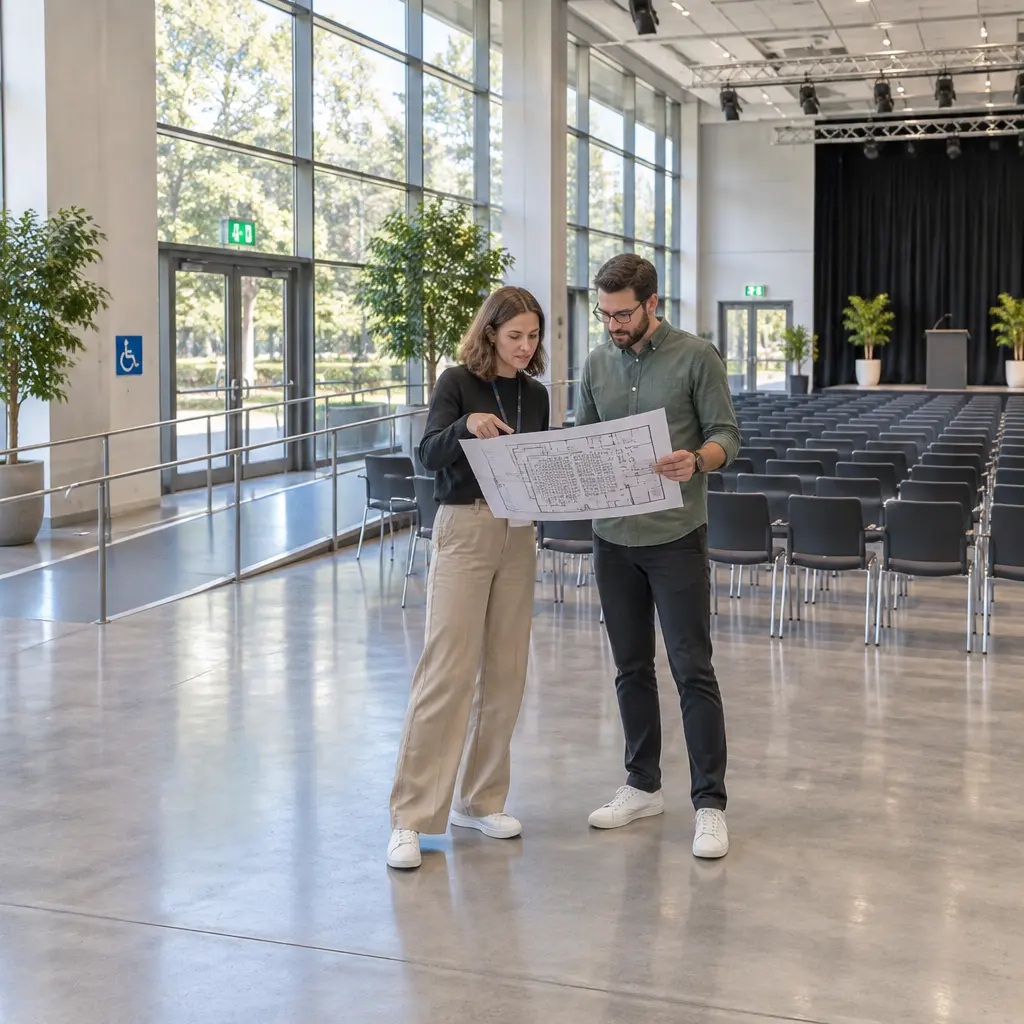
Preparing for the unexpected at an event means identifying what could go wrong, reducing preventable risks, and having clear plans to respond when circumstances change. Event organizers can strengthen that readiness by assessing hazards, coordinating staff and suppliers, planning for emergencies and communication, and adapting for accessibility and weather. The need is practical: the U.S. Bureau of Labor Statistics reported 5,283 fatal work injuries in 2023, underscoring why safety planning matters across workplaces, including temporary event sites. A written plan cannot prevent every disruption, but it can help people act faster and more consistently.
Risk assessment defines event preparedness
Risk assessment is the organized process of identifying hazards, estimating how likely and severe their consequences may be, and choosing controls. The U.S. Occupational Safety and Health Administration (OSHA) describes hazard identification and assessment as a core part of an effective safety and health program. For an event, that means considering the venue, audience, activities, equipment, staffing, and conditions before deciding what contingencies to prepare.
A useful assessment distinguishes hazards from risks: a hazard is a potential source of harm, while risk reflects the likelihood and impact of harm occurring. The same stage, for example, may present different levels of risk depending on crowd size, weather exposure, access routes, and the quality of its setup. Organizers should revisit the assessment when plans change, such as when attendance rises or a performance moves outdoors.
Operational and site hazards
Operational hazards include trip hazards, electrical equipment, temporary structures, food-service issues, vehicle movements, and crowd congestion. Walk the site with the venue representative and relevant contractors, and record who will address each issue and by when. The UK Health and Safety Executive’s event-safety guidance recommends planning for the event’s full lifecycle, from build and opening through breakdown, rather than focusing only on public hours.
Likelihood, impact, and changing conditions
A simple risk register can rate each hazard by likelihood and consequence, then list controls, an owner, and a review date. Include both high-consequence emergencies and ordinary disruptions, such as a delayed supplier or a failed microphone. Weather deserves special attention: the U.S. National Weather Service advises event organizers to monitor forecasts and identify shelter or evacuation options in advance, because lightning, heat, wind, and heavy rain can each require a different response.
Contingency planning turns risks into actions
A contingency plan specifies what people should do if a foreseeable disruption occurs. It converts assessment into practical decisions: who has authority, what triggers action, where people go, and how the team communicates. Plans should be concise enough to use under pressure and detailed enough to avoid ambiguity.
Emergency response and evacuation
An emergency response plan covers incidents such as fire, severe weather, medical emergencies, structural concerns, or a security threat. OSHA’s emergency-action-plan guidance identifies key elements including reporting procedures, evacuation routes, accountability after evacuation, and designated contacts. Event organizers should confirm which organization leads each response, coordinate with the venue and local emergency services where appropriate, and make sure staff know how to raise an alarm.
Map exits, accessible routes, assembly points, first-aid locations, and areas that may become unsafe. Avoid relying on one exit or one person’s memory. If the event is large or complex, assign trained personnel to support crowd movement and account for staff, performers, contractors, and volunteers after an evacuation.
Weather, technology, and supplier backups
Weather contingencies should define thresholds for pausing, moving, or cancelling activities, with one decision-maker authorized to act. For outdoor events, identify shelter that can accommodate the expected audience, and do not treat tents as protection from lightning. Technology and supply contingencies matter too: keep backup power or audio options where needed, maintain printed versions of essential contact lists, and agree on substitute suppliers or delivery windows for critical items.
Decision authority and continuity
Continuity planning keeps essential event functions operating—or brings them to a safe stop—when normal arrangements fail. Name the person who can suspend a program, close an area, or cancel the event, and identify a deputy if that person is unavailable. Set clear triggers, such as a forecast warning, loss of a critical service, or a medical incident affecting operations. This reduces delays caused by uncertainty about who is allowed to make the call.
Communication and coordination support a safe response
Event communication is the planned exchange of accurate, timely information among organizers, venue staff, vendors, attendees, and responders. A strong plan uses more than one channel because phones, internet access, or public-address systems may fail. It also distinguishes routine updates from urgent instructions so that people can recognize what needs immediate attention.
Staff roles, briefings, and contact lists
Before doors open, brief staff on their responsibilities, reporting lines, emergency signals, and the location of first aid and exits. Share a current contact sheet and a radio or messaging protocol, including a backup channel. The U.S. Federal Emergency Management Agency’s National Incident Management System emphasizes coordinated roles and shared terminology among organizations responding together; applying those principles helps event teams avoid conflicting instructions.
Attendee alerts and accessible information
Attendee messaging should tell people what happened, what action to take, where to go, and where to get updates. Use plain language and repeat critical information through appropriate channels, such as public address, staff announcements, displays, or event messages. The U.S. Department of Justice’s guidance on effective communication under the Americans with Disabilities Act explains that communication must be accessible to people with disabilities; organizers should plan for options such as captioning, visual alerts, accessible signage, and staff assistance suited to the event.
Accessibility and crowd planning reduce avoidable harm
Accessible event planning accounts for the varied ways people move, hear, see, process information, and seek assistance. It is not a separate add-on to emergency readiness: a route that works only for people who can use stairs, or an alert delivered only by sound, can leave attendees without a safe way to respond. The U.S. Census Bureau’s 2023 American Community Survey estimates that about 13% of the U.S. civilian, noninstitutionalized population has a disability, making inclusive planning relevant to a substantial share of the public.
Accessible routes and assistance
Check that entrances, seating, toilets, service areas, and evacuation routes are usable and clearly identified. Ask the venue about evacuation assistance procedures and ensure staff know how to offer help respectfully without separating people unnecessarily from companions or mobility devices. The U.S. Access Board’s accessibility standards provide technical requirements for accessible design, while event teams should also verify how those requirements apply to the specific site and temporary arrangements.
Crowd flow and capacity
Crowd planning manages how people enter, move through, and leave a site. Use attendance controls, clear signs, appropriately placed staff, and unobstructed circulation paths to reduce bottlenecks. Consider arrival surges, queues, intermissions, and simultaneous departures—not just the venue’s overall capacity. If a route becomes congested, staff should know how to redirect people without pushing additional attendees into the same pinch point.
Rehearsals and review make event plans usable
A plan is useful only if people can follow it. Rehearsals, tabletop exercises, and post-event reviews reveal gaps that a written document may miss. FEMA’s preparedness guidance promotes exercises as a way to test plans, clarify roles, and identify improvements; even a short scenario discussion can help a small event team expose unclear handoffs.
Tabletop exercises and brief drills
A tabletop exercise is a discussion-based walkthrough of a hypothetical incident. Try scenarios such as a sudden storm, a medical emergency near a crowded entrance, or a power outage during a performance. Ask each role what they would do, whom they would contact, and what information they need. Record unanswered questions and assign someone to resolve each one before event day.
After-action learning
After the event, compare what happened with what the plan expected. Record near misses, delays, communication problems, and effective actions, then update the risk register and procedures. Near misses are valuable warning signs: addressing them can prevent a small issue from becoming an injury or a major interruption at a future event.
Conclusion: preparedness protects people and the event
Preparing for the unexpected begins with risk assessment, turns identified hazards into contingency actions, and relies on coordinated communication, accessible crowd planning, and practiced procedures. No plan can eliminate uncertainty, but clear decision authority and realistic backups can reduce confusion when conditions change. Start by walking the site, writing down the most consequential risks, assigning owners, and rehearsing at least one response scenario with staff and partners. Review relevant local requirements and venue procedures as plans develop.
Sources: U.S. Bureau of Labor Statistics, National Census of Fatal Occupational Injuries in 2023, https://www.bls.gov/news.release/archives/cfoi_12192024.htm; U.S. Occupational Safety and Health Administration, Recommended Practices for Safety and Health Programs, https://www.osha.gov/safety-management; UK Health and Safety Executive, The Event Safety Guide, https://www.hse.gov.uk/event-safety/; U.S. National Weather Service, Event Ready, https://www.weather.gov/wrn/event-ready; U.S. Occupational Safety and Health Administration, Emergency Action Plans, https://www.osha.gov/etools/evacuation-plans-procedures/eap; U.S. Federal Emergency Management Agency, National Incident Management System, https://www.fema.gov/emergency-managers/nims; U.S. Department of Justice, ADA Requirements: Effective Communication, https://www.ada.gov/resources/effective-communication/; U.S. Census Bureau, 2023 American Community Survey, Disability Characteristics, https://data.census.gov/table/ACSST1Y2023.S1810; U.S. Access Board, Guide to the ADA Accessibility Standards, https://www.access-board.gov/ada/guides/; U.S. Federal Emergency Management Agency, Preparedness Exercises, https://www.fema.gov/emergency-managers/national-preparedness/exercises