
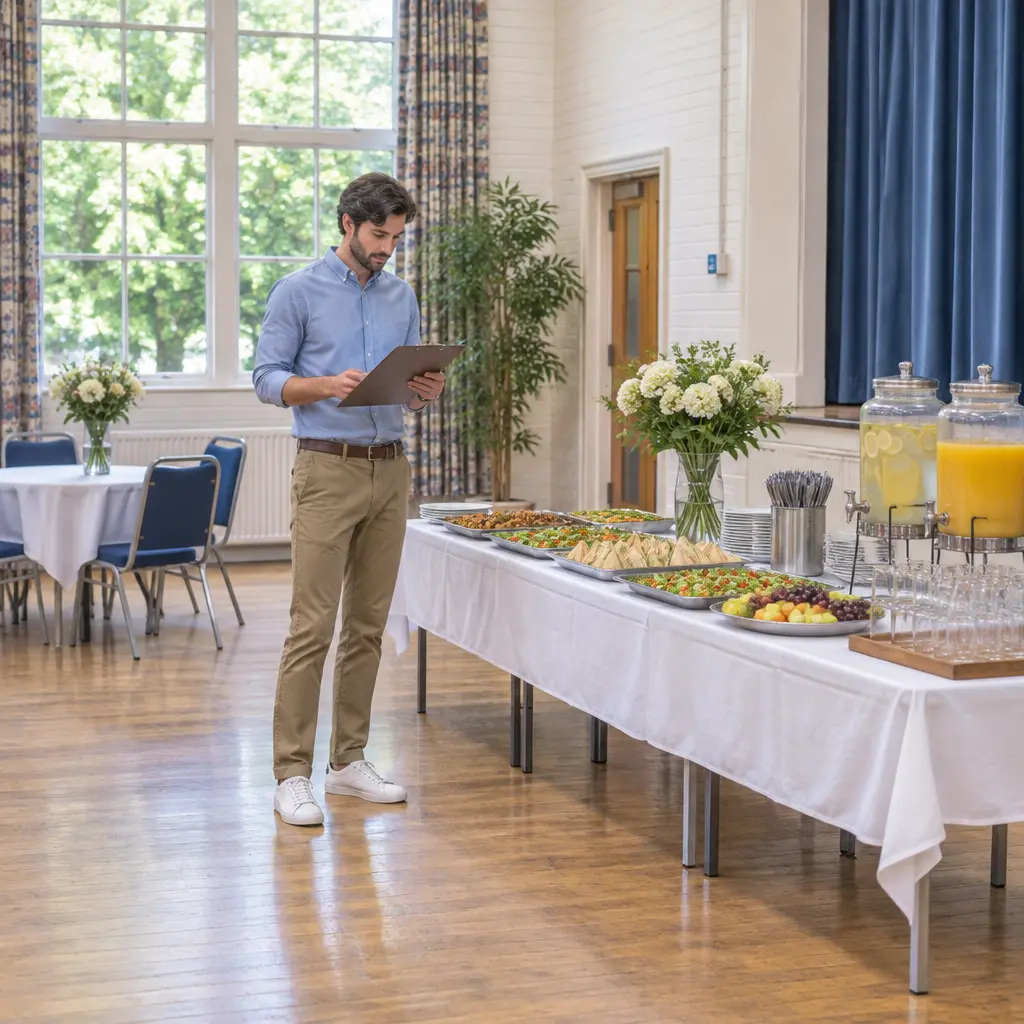
Estimating food and drink quantities means planning portions to match the number of guests, event length, menu, and serving style while limiting leftovers and shortages. A reliable estimate starts with a head count, accounts for how guests will eat and drink, and adjusts for the event’s timing and menu. This matters financially: the U.S. Environmental Protection Agency estimates that food waste makes up about 24% of municipal solid waste sent to landfills and incinerators, while careful purchasing can help households and hosts avoid unnecessary spending. The practical approach below covers portion benchmarks, food and beverage calculations, budget controls, and adjustments for different occasions.
Estimate food quantities by guest count and serving style
Food quantity planning is the process of translating an expected number of diners into amounts to buy or prepare. The U.S. Department of Agriculture’s MyPlate guidance emphasizes variety across food groups rather than a single fixed event portion; for event planning, that means building a menu from realistic servings and then scaling those servings to the guest count. No universal catering formula fits every gathering, so treat portion figures as starting estimates, not guarantees.
Set the usable guest count
The usable guest count is the number of people likely to eat, rather than the number invited. Start with confirmed responses, then consider whether children, vendors, or guests arriving late need separate allowances. For a household meal, count everyone who will be served. For an event with uncertain attendance, avoid buying for every invitee automatically; use registration or RSVP information and keep a small, practical buffer for essential items.
A simple planning equation is: servings to prepare = expected diners × servings per diner. For instance, if 30 people are expected and each is likely to have one main-course serving, plan around 30 servings, then adjust for the menu and event conditions. This makes the assumptions visible and easier to revise when the head count changes.
Choose portions according to the meal format
Serving style affects how much each person takes. A seated dinner with a plated main course is easier to portion consistently than a buffet, where guests may take multiple items. A reception with appetizers should be estimated by event duration and whether a meal follows. For buffets, use smaller serving utensils and replenish food in batches; this helps control portions while keeping the display fresh.
As a practical starting point, many event-planning guides suggest roughly 6–8 appetizer pieces per person for a short pre-dinner reception and more for a longer gathering without a meal. These are planning conventions rather than official nutrition standards. Adjust downward when guests will also have a full meal, and upward when appetizers are the main food. For a buffet, offer variety without preparing a full main-course portion of every dish for every guest.
Build a balanced menu without duplicating servings
A menu is the set of dishes and beverages offered at the event. Before calculating quantities, identify which items are mains, sides, snacks, and desserts. If a meal includes several substantial sides, guests may take smaller portions of each; if the menu has only one main and one side, those dishes need to carry more of the meal. Include vegetarian or other dietary options based on known guest needs, and label dishes clearly so guests can choose safely.
The bridge from food to drink planning is the event schedule: a longer event usually creates more opportunities to eat and drink, while a brief gathering needs less. Once the food plan is tied to the head count and serving format, estimate beverages using duration, weather, and the availability of nonalcoholic choices.
Estimate drink quantities by duration and conditions
Beverage quantity planning estimates the volume and variety of drinks needed for guests. It should account for the event’s length, indoor or outdoor setting, meal service, and guest preferences. The Centers for Disease Control and Prevention recommends that people drink water to stay hydrated, with needs varying by factors such as age, activity, and environment; therefore, water should be accessible rather than treated as an optional extra.
Calculate nonalcoholic drinks and water
A useful starting estimate for a short gathering is about two drinks per person during the first hour and one per person for each additional hour, counting water, soft drinks, and other nonalcoholic options together. This is a common event-planning rule of thumb, not a medical hydration prescription. Increase the water supply for hot weather, outdoor activity, or salty food, and provide enough cups or refill stations to make water easy to access.
For example, a three-hour event with 20 guests might begin with an estimate of 80 nonalcoholic drink servings: 20 guests × (2 servings for the first hour + 1 for each of the next two hours). This is a planning baseline. If many guests prefer water, use refillable dispensers; if the event is outdoors in warm conditions, add a buffer and keep drinks chilled safely.
Plan alcoholic beverages conservatively
Alcohol planning should be based on expected adult participation and responsible service, not on a fixed assumption that every guest will drink. The National Institute on Alcohol Abuse and Alcoholism defines a U.S. standard drink as 12 ounces of regular beer, 5 ounces of wine, or 1.5 ounces of distilled spirits, each containing about 0.6 fluid ounces of pure alcohol. Actual pours can exceed these amounts, especially with cocktails, so measured servings help control both cost and alcohol content.
Offer appealing nonalcoholic alternatives, provide food, and arrange safe transportation options. Do not plan alcohol quantities as a target for consumption. For events where alcohol is served, follow applicable local laws and venue policies, and ensure that service is not provided to underage guests or people who appear intoxicated.
Adjust for weather, activity, and access
Temperature and activity change beverage demand. A casual indoor meeting in cool weather differs from an outdoor celebration in heat, where guests may need more water and ice. The CDC notes that hydration needs vary with physical activity and environmental conditions. Use that principle to adjust the plan, while avoiding the assumption that one beverage quantity suits every person.
Once food and drink quantities are estimated, the next step is to control the purchase itself. Separating must-have servings from optional extras makes it easier to protect the budget without leaving guests short.
Control food and drink costs with a purchasing plan
A purchasing plan is a list of required ingredients and beverages, tied to recipes, package sizes, and expected servings. The USDA’s FoodKeeper resource provides storage guidance for many foods, which can help planners choose items that can be safely stored or used later. Cost control is not just about buying less: it also means selecting suitable package sizes, preventing spoilage, and using leftovers safely.
Convert portions into shopping quantities
For each recipe, identify how many servings it yields and compare that yield with the planned number of servings. If a dish serves 10 and the event needs about 30 servings, multiply the ingredients by three, then check whether package sizes require rounding. Keep the shopping list organized by category—produce, proteins, pantry items, dairy, and beverages—and distinguish ingredients already on hand from items to purchase.
Check unit prices and usable yield, not just sticker prices. A larger package may cost less per ounce but can be wasteful if the remaining food will spoil. Likewise, ready-to-serve items may reduce labor but increase cost. Compare options based on both price and realistic use after the event.
Use a measured buffer instead of overbuying
A buffer is a small reserve for reasonable uncertainty, such as a few extra servings of a popular staple. It should be deliberate and limited, not an across-the-board increase for every dish. Prioritize flexible, shelf-stable items or foods that can be safely repurposed, and avoid excess quantities of expensive or highly perishable dishes. For an event with a firm RSVP list, a smaller buffer may be appropriate than for an open-house gathering.
The EPA reports that food is the largest category of material sent to U.S. landfills, at about 24% of municipal solid waste disposed of in landfills and incinerators. That national statistic does not predict waste at an individual event, but it underscores why measured purchasing and thoughtful leftovers matter.
Store and reuse leftovers safely
Leftovers are food remaining after service that can be stored for later use if handled safely. The USDA advises refrigerating perishable food within two hours, or within one hour when the temperature is above 90°F, and using shallow containers to help food cool. Keep cold foods cold and hot foods hot during service; do not leave perishable dishes at room temperature beyond recommended limits.
Plan containers and refrigerator space in advance, and label leftovers with the date. If safe storage or later use is unlikely, reduce the original quantity rather than relying on donation or reuse as a last-minute fix. With the purchasing plan in place, tailor the numbers to the type of gathering, since a brunch, picnic, and formal dinner have different consumption patterns.
Adapt quantity estimates to the occasion
Occasion-based planning adjusts a standard estimate for the event’s purpose, timing, and guest behavior. The most useful variables are whether guests expect a full meal, how long the event lasts, what food is served before or after it, and whether attendees can easily obtain more. Treat these factors as adjustments to a baseline rather than reasons to multiply every item indiscriminately.
Meals, receptions, and open houses
A seated meal has predictable portions and can be planned by course. A reception may need more small bites per guest if no meal follows. An open house has staggered arrivals, so food can be replenished in smaller batches rather than placed out all at once. For a meeting that overlaps a usual mealtime, assume guests may expect more substantial food than they would at a mid-afternoon gathering.
Children, dietary needs, and guest preferences
Children may take smaller portions, but age and appetite vary, so avoid applying one reduction to every child. Ask about dietary requirements when collecting RSVPs and provide clearly identified alternatives. When preferences are unknown, choose a mix of familiar options and dishes that can serve multiple dietary patterns; this reduces the risk of spending heavily on a specialized item that few guests can eat.
A worked example for a small gathering
Suppose 24 adults are attending a three-hour evening gathering with a buffet and no formal dinner afterward. The host might plan several appetizer choices, totaling a baseline of roughly 6–8 pieces per person for a short reception, then increase only if the gathering is longer or appetizers are effectively the meal. For nonalcoholic drinks, the rule-of-thumb calculation gives 24 × 4 servings, or about 96 servings across water and other choices. The host should then adjust for weather and preferences, estimate alcoholic drinks only for adults who are expected to choose them, and buy a modest reserve of flexible items rather than enlarging every dish.
This example is a starting model, not a fixed prescription. A buffet with a full main course would require different food portions, while a hot outdoor event could require more accessible water. A simple chart can make these decisions easier: list guests, event hours, meal format, servings per person, planned total, and final purchase amount. Reviewing that chart before shopping is a practical final check against both shortages and overspending.
Conclusion: Estimate quantities, protect the budget, and reduce waste
Accurate food and drink estimates begin with a realistic guest count and portions matched to the serving style. Beverage calculations should account for event duration, weather, and access to water, while alcohol planning should use measured standard servings and responsible service. A recipe-based shopping list, a limited buffer, and safe leftover handling help control costs and avoid waste. Before buying, confirm attendance, review the menu and event schedule, and check storage needs. For further guidance, consult USDA food-safety resources, CDC hydration information, and EPA food-waste materials.
Sources: U.S. Environmental Protection Agency, Sustainable Management of Food: Facts and Figures, https://www.epa.gov/sustainable-management-food/sustainable-management-food-basics; U.S. Department of Agriculture, MyPlate, https://www.myplate.gov/; Centers for Disease Control and Prevention, About Water and Healthier Drinks, https://www.cdc.gov/healthy-weight-growth/water-healthy-drinks/index.html; National Institute on Alcohol Abuse and Alcoholism, What Is A Standard Drink?, https://www.niaaa.nih.gov/alcohols-effects-health/overview-alcohol-consumption/what-standard-drink; U.S. Department of Agriculture, FoodKeeper App, https://www.foodsafety.gov/keep-food-safe/foodkeeper-app; U.S. Department of Agriculture, Leftovers and Food Safety, https://www.fsis.usda.gov/food-safety/safe-food-handling-and-preparation/food-safety-basics/leftovers-and-food-safety.