
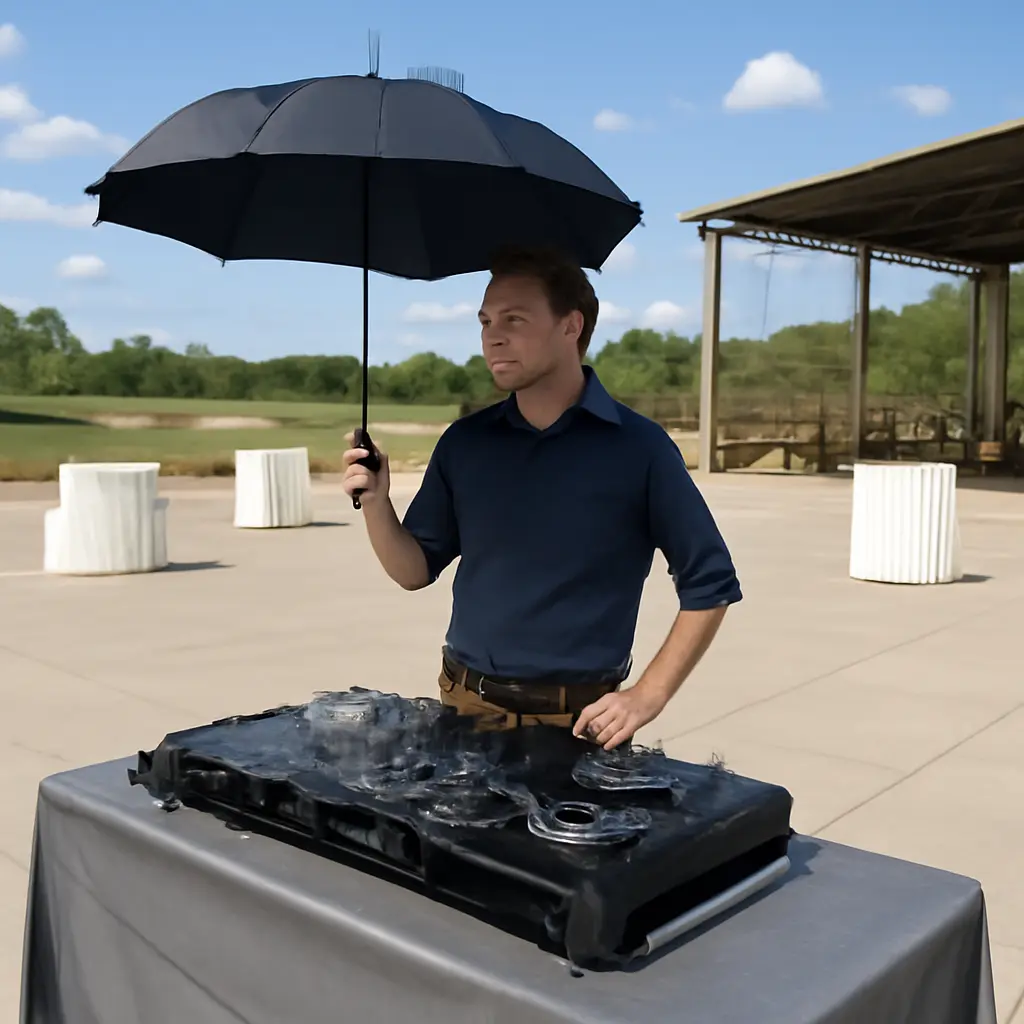
Before you book an outdoor DJ, ask exactly what happens if rain, wind, heat, or a power problem disrupts the event. A weather contingency plan should spell out who makes the call, when it is made, where the DJ and equipment will move, and what backup power or rescheduling options exist. That matters because the National Weather Service warns that lightning can strike miles from a thunderstorm, while the Occupational Safety and Health Administration identifies wind, rain, and electrical hazards as risks around outdoor work. A clear plan protects guests, performers, equipment, and your budget.
Weather contingency planning for an event DJ
A DJ weather contingency plan is the agreed set of safety, equipment-protection, communication, and contract procedures for keeping an event safe and workable when outdoor conditions change. It is more than a tent or a promise to “keep an eye on the forecast.” Ask the DJ to describe the specific trigger for pausing, moving, or canceling the performance, and make sure the venue and event organizer agree with that process.
There is no single universal wind or rainfall threshold suitable for every DJ setup: safe limits depend on the equipment, shelter, site, and manufacturer instructions. The National Weather Service’s lightning guidance is more definite: when thunder is heard, people should move to a substantial enclosed building or hard-topped vehicle, and wait at least 30 minutes after the last thunder before resuming outdoor activity. A tent alone is not a safe lightning shelter.
Decision authority and weather triggers
Decision authority identifies who can stop the music or evacuate the performance area. Agree in advance whether the DJ, event organizer, venue manager, or designated safety lead has final say—and confirm that anyone can call an immediate stop when there is a direct hazard. Ask what conditions trigger action, including lightning, strong gusts, heavy rain, extreme heat, or an official weather warning.
For lightning, use the National Weather Service’s thunder-and-30-minute rule rather than waiting for rain to begin. For wind and heat, ask the DJ and venue to set site-specific limits based on equipment guidance, shelter design, and local safety advice. The plan should also state how the team monitors conditions, such as an official weather alert service, and who communicates a change to guests and vendors.
Shelter, relocation, and equipment protection
A relocation plan names a usable alternate performance location and explains how quickly the DJ can move there. Confirm that the indoor backup has enough room, suitable power, workable access for loading equipment, and any required venue approval. If no indoor location exists, clarify whether the event will pause, be shortened, or be canceled.
Ask how speakers, controllers, mixers, cables, and power connections will be protected from moisture and wind. The Occupational Safety and Health Administration advises that electrical equipment exposed to water can create shock hazards and that equipment should be suitable for its environment. A canopy may help protect gear from light rain, but it does not automatically make exposed cables or electrical connections safe. The DJ should explain what conditions require equipment shutdown and who is responsible for safe disconnection.
Weather backup options and contract terms
Once the safety procedure is clear, compare the practical backup options: moving indoors, rescheduling, shortening the set, or canceling. These are different forms of contingency planning, and each should be documented rather than left to a stressful day-of decision.
Indoor backup and power continuity
An indoor backup is only useful if it is available when needed. Verify the room, access time, capacity, electrical supply, and whether the DJ’s fee includes moving and setting up equipment again. If the plan relies on a generator, ask who supplies it, whether it is suitable for the equipment load, where it will operate safely, and how fuel and noise will be managed. Do not assume a household extension cord or unverified generator arrangement is adequate.
Have the venue or a qualified professional confirm the electrical setup. OSHA’s electrical-safety guidance emphasizes keeping electrical equipment and connections appropriate to their conditions of use. For events, that means a backup power plan should be specific about equipment, placement, weather exposure, and the person responsible—not simply “we have a generator.”
Rescheduling, cancellation, and fees
The contract should explain what counts as a weather-related interruption and what happens financially if the performance cannot proceed. Check whether the DJ offers a new date, partial refund, credit, reduced performance, or no refund; whether travel and setup fees remain payable; and how much notice is required. Also clarify whether the DJ can leave or stop working when conditions become unsafe, even if the event organizer wants to continue.
Read the weather language alongside the venue agreement and event insurance terms. Those documents may define postponement, force majeure, cancellation, or reimbursement differently. If the wording is unclear, request written clarification before paying a nonrefundable deposit.
Questions to ask before booking an outdoor DJ
Use these questions to turn a general assurance into a practical plan:
- What weather conditions make you pause, move, or cancel the performance?
- Who has authority to make that decision, and how will the decision be communicated?
- Where is the indoor or sheltered backup, and has the venue approved it?
- How do you protect equipment and electrical connections from rain and wind?
- What is the lightning procedure, including how long the event must wait before restarting?
- Is backup power available, and who checks that it is appropriate for the equipment?
- What happens to the fee if the event is delayed, relocated, shortened, or canceled?
- Can you provide the agreed contingency terms in writing?
For example, if thunder is heard during an outdoor reception, the agreed procedure should stop the performance and move people to a substantial building or hard-topped vehicle—not merely beneath the DJ’s canopy. The team can then follow the National Weather Service’s recommendation to wait at least 30 minutes after the last thunder before resuming outdoor activity. This is a practical illustration of why safety triggers and decision authority should be settled before event day.
Conclusion: Book the plan, not just the playlist
A reliable DJ weather contingency plan defines decision authority, hazard triggers, shelter and relocation arrangements, equipment and power safeguards, and the financial consequences of a disruption. Ask specific questions, coordinate with the venue, and put the answers in the contract. Before booking, request the DJ’s written plan and confirm that it follows official safety guidance—especially the National Weather Service’s lightning precautions.
Sources: National Weather Service, Lightning Safety, https://www.weather.gov/safety/lightning; Occupational Safety and Health Administration, Electrical Safety, https://www.osha.gov/electrical; Occupational Safety and Health Administration, Protecting Workers from the Effects of Heat, https://www.osha.gov/heat-exposure