
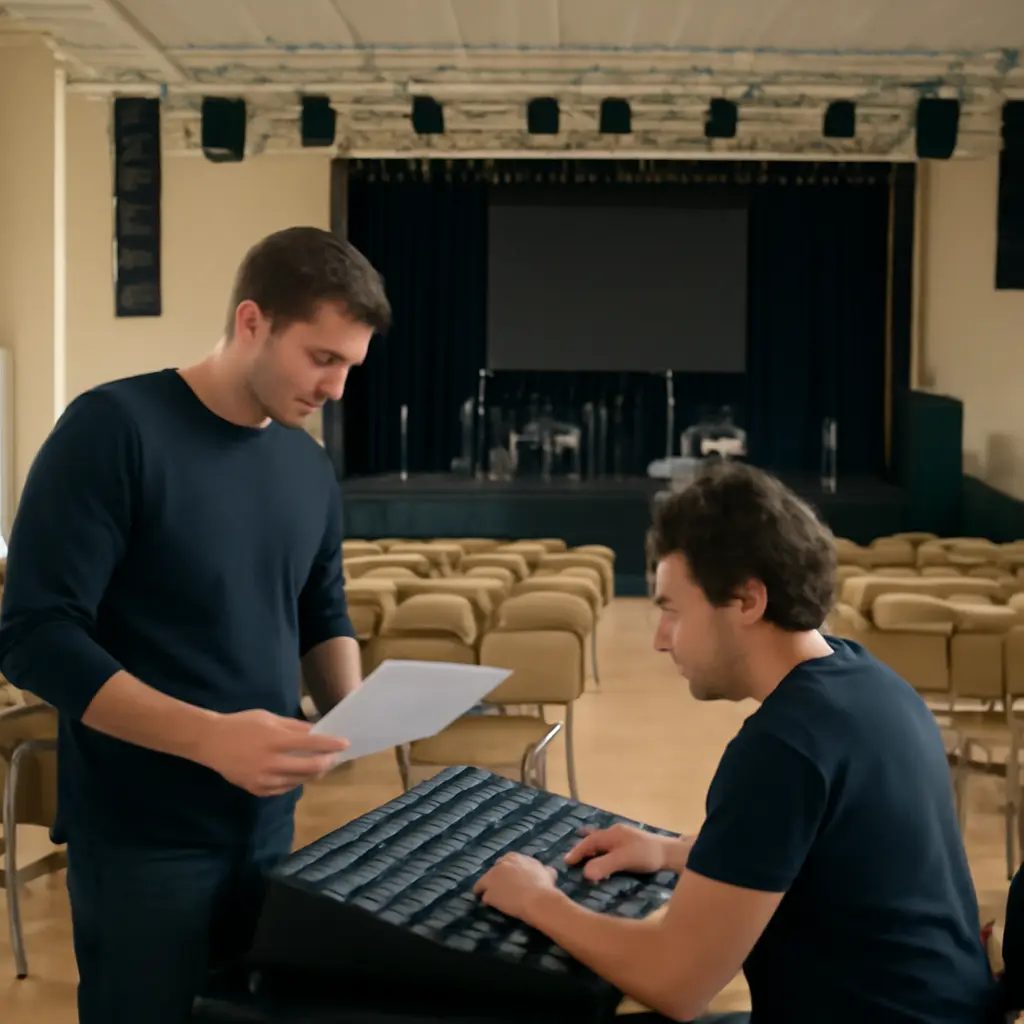
A flawless show flow is the planned, coordinated sequence of cues, people, and technical changes that carries a live production from opening to close. It differs from technical chaos not because problems never occur, but because responsibilities, communication, and contingency plans let the team respond without losing the audience’s confidence. Event safety guidance from the UK’s Health and Safety Executive emphasizes advance planning, clear roles, and coordination; in practice, those same disciplines underpin reliable show flow. The essentials are a usable run of show, rehearsed cueing, disciplined communication, and a practical recovery plan.
Show flow depends on a reliable run of show
A run of show is the working document that orders program segments and records their timing, ownership, and transitions. It turns an event concept into a shared operational plan. There is no single universal format, but a useful version identifies what happens, who is responsible, what cue starts it, and what must be ready next.
This is more than a schedule. A clock-time agenda might say that a speaker begins at 10:00 a.m.; a show-flow document also states who introduces the speaker, which microphone is live, what appears on screen, where the speaker enters, and what happens if the previous segment runs long. Those linked details reduce ambiguity at the moment when several departments must act together.
Timing and segment ownership
Timing assigns a planned duration or target time to each segment; ownership names the person accountable for advancing it. Include both elapsed duration and important clock-time deadlines when the event depends on a fixed finish, such as a broadcast window or venue curfew. The University of California, Berkeley’s event-planning guidance likewise treats schedules, assigned responsibilities, and coordination as practical planning tools.
A segment owner should know the intended start, end, handoff, and decision point. If a keynote is running late, for example, the show caller should know whether to shorten a break, remove an optional video, or accept a later finish—with the relevant decision-maker identified in advance.
Transitions as planned show-flow units
A transition is the change from one program state to another: a speaker handoff, stage reset, video playback, lighting shift, or audience movement. Treat transitions as segments with owners and cues, rather than as empty space. A few seconds of silence may be intentional; an unplanned pause caused by a missing microphone or unresolved slide is not.
Planning transitions also reveals dependencies. A panel may not be ready until chairs are placed, microphones are checked, and the moderator is in position. Mapping those tasks against the program helps teams prepare the next moment before the current one ends.
Show flow relies on clear cueing and communication
Cueing is the controlled instruction that prompts a technical or operational action at the right moment. In a typical live production, the show caller communicates cues while audio, lighting, video, stage, and floor teams execute them. The exact chain varies by event, but one clearly understood source of show direction is safer than competing instructions.
This is where show flow connects directly to technical execution: a good plan is only effective when everyone shares the cue language, knows how to acknowledge instructions, and can report a problem promptly.
Cue language and confirmation
A cue should identify the action and the moment to act. For example, “Stand by video one” prepares the operator; “Video one, go” releases the cue. Teams should agree on the exact terminology and acknowledgement process before the event, especially when multiple operators share an intercom channel.
The National Fire Protection Association’s event-safety resources stress planning, communication, and coordination among stakeholders. Although production cueing is not the same as emergency command, the shared lesson is clear: roles and messages need to be understood before pressure rises.
Intercom, radio, and channel discipline
Intercom and radio systems let teams coordinate across a venue, but only if channels are usable. Assign channels by function when the scale requires it, keep messages concise, and avoid using operational channels for nonessential conversation during critical moments. For small productions, a concise briefing and agreed hand signals may be more reliable than adding unnecessary equipment.
The Federal Communications Commission regulates radio services and equipment in the United States. Event teams using wireless systems should confirm that their equipment and operating practices comply with applicable rules rather than assuming that any frequency is available for production use.
Show flow improves through rehearsals and contingency planning
A rehearsal tests the show plan against real people, equipment, timings, and room conditions. A contingency plan defines what the team will do if a required element fails or changes. Together, they turn a document from an assumption into a tested operating method.
Not every event needs a full technical rehearsal, but every event benefits from checking its highest-risk transitions and dependencies. The UK Health and Safety Executive’s event guidance recommends planning for foreseeable risks and coordinating those involved in delivery; rehearsing critical handoffs is a practical way to expose gaps before the audience arrives.
Technical rehearsals and cue-to-cue checks
A technical rehearsal checks the elements that must work together: sound, lighting, video, playback, stage movement, and cues. A cue-to-cue rehearsal focuses on transitions and technical changes rather than performing every speech in full. This is useful when time is limited, because it concentrates attention on moments where a missed cue could interrupt the program.
For example, a product launch can test the walk-on, presentation playback, demonstration, and exit sequence in order. This confirms not just that each item works individually, but that the handoff between them is clear and timed correctly.
Backup plans and decision thresholds
A useful contingency plan names the failure, the fallback, and who may authorize the change. Examples include a locally stored copy of a presentation, a spare microphone, a manual lighting state, and a shortened version of a segment. A decision threshold—such as the point at which the team switches to the backup—prevents hesitation and contradictory improvisation.
Contingencies should match the actual risk. A backup laptop does not solve a failed video file if the file exists only on the primary machine; a spare microphone is not ready unless it is charged, tested, and accessible. Check the complete recovery path, not merely the presence of spare gear.
Show flow is strengthened by defined roles and safe operations
Show flow is a team outcome. Production direction, technical operation, stage management, presenters, venue staff, and safety personnel each hold information that can affect the next cue. Defining who decides, who performs, and who communicates helps prevent both duplicated effort and neglected tasks.
Role clarity and escalation
A responsibility plan identifies who owns each task and who has authority when plans change. The show caller may coordinate cues, while a producer or event lead decides whether to cut content or alter the schedule. Venue or safety leads must retain authority over safety decisions within their remit. These boundaries should be briefed before doors open.
This structure matters during an incident. If a stage element is unsafe, the response should not depend on a debate over whether the production team can continue. Establishing a stop-show or escalation procedure in advance makes the response faster and clearer.
Safety as part of the show plan
Safe operations include audience movement, accessible routes, stage access, equipment placement, and emergency communication. The U.S. Occupational Safety and Health Administration’s event-related materials and the UK Health and Safety Executive’s guidance both reinforce the need to assess hazards and coordinate work. Safety checks should therefore be integrated into the schedule and site plan, not left as an informal last-minute task.
The Events Industry Council’s APEX standards provide widely used frameworks for event terminology and planning. Applying consistent documentation and operational standards helps teams communicate across vendors and venues, though the precise requirements depend on event type, location, and applicable law.
Conclusion: show flow turns preparation into confident delivery
Flawless show flow comes from a dependable run of show, explicit segment ownership, planned transitions, disciplined cueing, rehearsed technical handoffs, and realistic contingencies. Clear roles and safety procedures keep those systems effective when conditions change. The goal is not to eliminate every surprise; it is to make the next action understandable when one occurs.
Before the next event, review the run of show with every department, rehearse the highest-risk cues, verify backups, and agree on who can make changes or stop the program. These practical steps help audiences experience a coherent event while the production team manages its complexity out of sight.
Sources: UK Health and Safety Executive, Event safety, https://www.hse.gov.uk/event-safety/; University of California, Berkeley, Event Planning, https://events.berkeley.edu/; National Fire Protection Association, Emergency Planning for Public Events, https://www.nfpa.org/education-and-research/emergency-response/emergency-preparedness/public-events; Federal Communications Commission, Wireless Microphones, https://www.fcc.gov/wireless/bureau-divisions/mobility-division/wireless-microphones; U.S. Occupational Safety and Health Administration, Event Safety, https://www.osha.gov/; Events Industry Council, APEX Standards, https://eventscouncil.org/Events-Industry-Resources/APEX